
Slow Wars: Amazonia, Cosmologies of Endurance, and What’s Worth Fighting For
Wars don’t start with missiles. They start with attention and narrative: who controls it, who disappears, and who gets turned into background noise.
When COVID-19 arrived, the world declared war on an invisible enemy. A virus took the stage with an unprecedented coronation, and everything else—other deaths, other wars, other slow catastrophes—moved to the wings. In those first months, even hope felt possible: a rupture big enough to force change.
Then the world learned how to forget again.
When Russia invaded Ukraine, prices became the language of fear: fertilisers, fuel, supply chains. Everyone watched—partly because the images looked familiar, partly because it was a European conflict. But the question that kept returning to me was the one I wrote back then: how many other wars unfold at the same time, with consequences as vast, but with an audience too small to matter? When the stage is white and Western, the audience grows. When the stage is elsewhere—Africa, Asia Minor, the Amazon—attention collapses.
That question never stopped being relevant. It just changed costumes. Now the Middle East holds multiple fires at once: Israel–Palestine, Lebanon caught in the tremors, and Iran pulled into a widening confrontation that turns geopolitics into ordinary dread. War spreads like smoke: across borders, into markets, into nervous systems, into family histories.
The body knows what headlines can’t hold. Lebanon lives in my own lineage. What happens there does not remain “over there.” It lands in layers; layers of history that keep vibrating even when we aren’t directly living the event. Some things persist in an invisible but felt field: a WhatsApp message, a siren in a video, a map on the news, and suddenly the past moves through the present. The body becomes a live archive.
That is why war is never only territorial. War colonises time. It turns the future into an anxious question. It turns the past into an unhealed presence.
And yet, if war colonises attention and narrative, attention and narrative can also become forms of resistance.
The piece I wrote about “the invisible wars” asked why the world mobilises for certain deaths and not others, why some conflicts get framed as “great wars” while others remain uncounted under trees, on hillsides, and far from cameras. The question still stands. In fact, it sharpens. Because the “wars” we ignore are not only military. They include slow wars: environmental destruction, forced displacement, the extraction of land and life, and the normalisation of despair.
When I started dating my husband (he comes from a Jewish family and I come from a Lebanese one), people would smile and say, “You represent the peace of Gaza.” They meant it as a compliment, but it sometimes felt like a kind of dismissal, as if peace were a romantic symbol, and love alone could substitute politics and action; as if centuries of dispossession, fear, terror, propaganda, grief, and power could dissolve into a couple’s story.
Peace is not a relationship. Peace costs.
It costs the willingness to sit with complexity without turning it into paralysis. It costs the refusal to rank suffering by proximity, familiarity, or political convenience. It costs the courage to demand accountability without turning grief into revenge. It requires forms of attention and narrative that don’t assign heroes and victims according to the news cycle.
The same mechanism plays out again and again. A war becomes “real” when it disturbs the markets that keep our lives running. A war becomes “urgent” when it threatens the infrastructures we depend on. The problem isn’t that people care. The problem is what triggers care, and what fails to.
And war costs far more than we admit, even in carbon.
A recent article written by a friend of mine in Folha de S. Paulo makes the point with brutal clarity: since the Kyoto Protocol (1997), greenhouse-gas emissions from military routines and war have largely remained outside formal carbon accounting and reporting. The piece cites the Conflict and Environment Observatory and reports that military activities account for about 5.5% of global emissions, more than civil aviation and roughly half of emissions from global deforestation. If the world’s armed forces were a country, they would rank among the four largest emitters, below India and above Russia. The text also notes that the Pentagon is the world’s largest institutional emitter, exceeding countries like Portugal or Sweden.
War burns oil, yes—but it also burns infrastructure. It generates carbon through training, logistics, combat, reconstruction, fires, environmental devastation, forced displacement, humanitarian crises, and the industrial complexes that feed arms production. The Folha piece points to estimates that the long-term climate cost of the destruction and reconstruction of Gaza reaches 31 million tonnes of CO₂, more than the annual emissions of over a hundred countries. It also cites estimates of roughly 200 million tonnes of CO₂ generated by three years of war in Ukraine, and notes that NATO rearmament could add further annual emissions on a similar scale.
And while climate negotiations struggle to mobilise funds to support the most vulnerable, military spending keeps rising. The article cites Stockholm International Peace Research Institute data: US$2.7 trillion in global military spending in 2024 (a record, nearly 10% up from the previous year), with the United States, China, Russia, Germany, and India accounting for around 60% of the total.
War is not only a humanitarian catastrophe. It is a climate policy, just never called by its name.
Which brings me back to Brazil—to the Amazon and the favelas of Rio—because wars rage there too, the kind that rarely make global headlines unless they disrupt commodity flows or market prices.
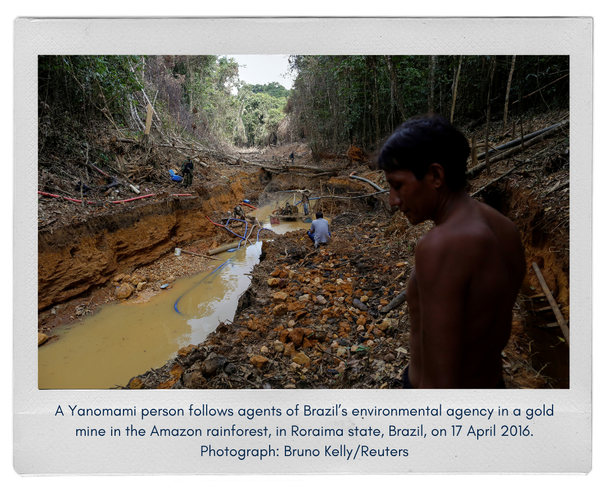
Under Amazonian treetops and along the hillsides of the favelas, conflict rarely draws a clean front line. It spreads through intimidation and disappearances, killings and forced labour, clandestine airstrips and drug wars, and through the steady loss of innocent youth, forests, and entire peoples. When I worked in São Félix do Xingu—one of the municipalities with the highest deforestation rates and some of the most violent land conflicts in the Brazilian Amazon—local farmers told me something chilling: there was a daily “quota” of people to kill. If they couldn’t find the intended targets, they would kill whoever they could. The forest dies, its peoples die, innocent people die. And because we live in a shared web of life, we die too. Just more slowly, and at a distance.
Modern societies deny the link between the Amazon and everyday life because the forest feels too far away, too wild, too difficult to imagine. But the link is not only real; it is tightening. From rubber to minerals, from beef to biodiversity, from timber to medicines, the Amazon sits inside global supply chains that power modern high-tech lifestyles. If fertilisers and fuel feel urgent when war strikes Europe, oxygen and water should feel urgent all the time, because they don’t merely affect prices; they sustain life.
That is the part modern attention and narrative struggle to hold: the Amazon is not just a landscape or a selling enterprise. It is a living system. It produces oxygen, stores carbon, stabilises rainfall patterns, and hosts biodiversity—the genetic library of life. Lose that, and the cost won’t show up only at the pump or the supermarket. It will show up in crop failure, disease, heat, migration, conflict, and the thinning of what makes Earth habitable.
And then there is the genocide that doesn’t always look like genocide: the death of elders, the erasure of languages, the collapse of transmission. COVID-19 and Amazonian wars do not only kill bodies; they take ancient knowledge-holders, people who carry medicines, traditions, ancestral intelligence, and systems of healing refined over generations. When those elders disappear, the loss cannot be recovered by uploading a dataset or writing a report. Much of this knowledge lives in voice, practice, relationship, and place.
That is why the Amazonian war threatens more than “resources.” Indigenous peoples hold ancestral knowledge about healing, knowledge the world will increasingly need as crises multiply.
Modernity tends to recognise that value only when it can extract it: when a plant becomes a patented compound, when a ritual becomes a fashion, when a medicine becomes a product stripped of its people.
So what makes a war a “great war”? Nuclear power? Casualty numbers? Proximity to Western memory? Or do wars become “great” only when they disturb those with the loudest microphones?
The carbon of war should shock us, but the deeper shock is this: the world can mobilise trillions for weapons, yet hesitates to mobilise what is needed to keep life breathable. The world can treat war emissions as exempt from reporting, yet it demands endless proof from those defending forests. The world can mourn some deaths loudly while treating others as collateral.
Hope begins where the easy sentences end.
A Jewish–Lebanese couple does not “represent the peace of Gaza.” But that comment reveals something worth keeping: the yearning for peace is real; people just keep wanting it cheaply. Peace may not be a relationship, but it can be made of recognising the many relationships that sustain us.
It is discipline: attention that stays, language that refuses dehumanisation, politics that accepts accountability, and care that builds the conditions for life rather than profits from death.
Attention and different narratives can decolonise time, little by little. They can keep memory alive without turning it into hatred, and they can turn grief into responsibility. That is the hope I can still defend: not optimism, not simplicity, but the decision to keep seeing, even when the world trains us to look away.
The task now is to widen the frame: to see war as a climate crisis, to see the Amazon as a frontline, and to understand that Indigenous genocide will not only injure Indigenous peoples; it will injure the future of the world.
The future will not be saved by novelty alone. It will be saved by memory and by learning, finally, to treat the wars we cannot easily see as wars we cannot afford to lose. And that is what my book Chanting Spring tries to bring into view.
And then, small as it sounds, hope continues through the stubborn work of repair. Not repair as a metaphor for instant care and harmony, but repair as an ethic: building networks that hold people through crisis; defending humanitarian access; protecting civilians; refusing dehumanisation; supporting those who work for ceasefires (including in the forest), accountability, and long-term political solutions that address both rights and security. This is slow work, work that rarely gets seen or properly recognised. But it is also the only work that has ever made peace more than a word. After all, as Brazilian environmentalist Chico Mendes so courageously taught us, we have other weapons.
A Jewish–Lebanese relationship does not “represent the peace of Gaza.” But it can represent something else: the refusal to let identity become destiny. The refusal to let inherited trauma be the only inheritance. The insistence that the invisible field of history does not get the final word.
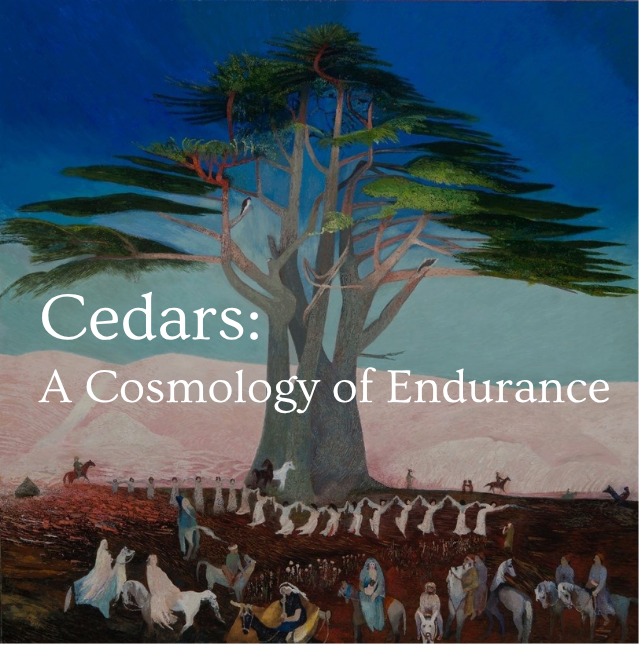
Lebanon is famous for its cedars. When I visited with my mother, I felt something I still struggle to name: the cedar does something rare, it makes time visible, as if endurance could take the shape of a living being.
You can stand beneath a cedar of Lebanon and feel how quickly human lives move. The branches don’t hurry. The trunk doesn’t negotiate with the season. It holds the mountain’s weather—snow, wind, drought—with a kind of patient authority. No wonder so many cultures have treated this tree as more than wood. People have taken it as a measure of what lasts, a witness, a threshold, a “natural city.” Even UNESCO describes the remaining cedar forests as a last vestige of ancient stands, trees bound to deep time and to the long memory of the region.
One of the earliest cedar cosmologies appears in the Epic of Gilgamesh. In the story, the Cedar Forest is not merely a place; it is a charged domain: guarded, sacred, dangerous, and entangled with divine order. Gilgamesh and Enkidu enter it, confront its guardian Humbaba, and cut the cedars in a quest for fame, an ancient drama of extraction, glory, and consequence written into the roots of literature itself. The cedar here becomes a moral boundary: a forest that should not be treated as mere material. The myth reads uncannily like a prophecy for modernity. What happens when the hunger for renown (or power) reaches the last remaining giants?
A different cedar cosmology runs through the Hebrew Bible, where “cedars of Lebanon” become a language for majesty, strength, and divine planting. The tree is not simply admired; it becomes a sacred building material. Solomon’s temple narrative explicitly ties cedar wood to the architecture of holiness and kingship: cedar shipped through agreements with Hiram of Tyre, cedar as the substance of a world made durable. The symbolic move is powerful: the cedar stands not only for beauty, but for the kind of strength that exceeds human manufacture, grown, not built.
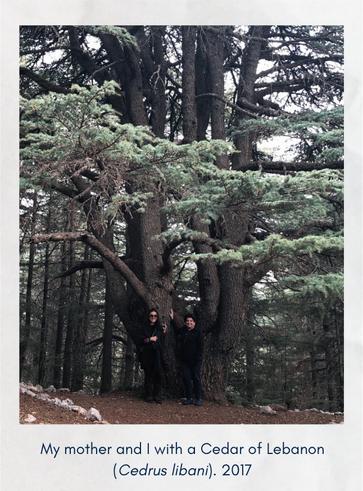
Christian Lebanon adds another layer. In the Qadisha Valley and the Cedars of God, centuries of monastic life turned the cedar forest into a site of reverence, pilgrimage, and spiritual continuity. UNESCO’s description of the site explicitly frames the forest as a rare surviving stand and notes its deep historical and scriptural resonance. Here, the cedar becomes not just a tree, but a witness tree, one that “outlives” empires, carries prayers, and holds a kind of vertical silence.
Modern Lebanon, of course, raised the cedar into a national emblem. It appears on the flag, condensed into a sign that tries to carry the weight of a country’s complexity: endurance amid fracture, continuity amid exile, rootedness amid repeated upheaval. A tree as a country’s self-portrait is never innocent. It declares what a people longs for: stability, dignity, and long time.
And then there is a quieter cosmology, the one created by human acts of return.
I was lucky to bury the placenta of my daughter, Aya, beneath a cedar in Richmond Park, to honour this sacred tree. I did it not as superstition, but as a gesture of belonging: a way to mark that birth does not arrive from nowhere, and that a child’s life begins inside an older web of life.
Across many cultures, placenta burial has served as a ritual of connection; sometimes to land, sometimes to ancestry, sometimes to protection, sometimes to the future. Anthropological and health literature notes placenta burial as a widespread practice, and in some traditions people plant a tree on the burial site, linking the child’s life to the growth of a living being rooted in the earth. Under a cedar, the gesture felt like a vow: not ownership of land, but responsibility toward it; not sentiment, but relationship.
This is what the cedar teaches across its many cosmologies: endurance is not passive. A cedar endures because it holds: soil, water, weather, habitat, time, carbon. And perhaps a human heart endures in the same way: by holding relationship, by refusing to let the living world become background.
The cedar of Lebanon stands where myth meets climate, scripture meets nationhood, and ecology meets ancestral ritual. When reverence breaks, violence follows—sometimes as narrative, sometimes as war. And war is never only political: it burns carbon and memory, it erases knowledge and stories, it redraws the conditions of life.
In the end, the cost isn’t only measured in headlines or prices. It is measured in breath, forests, and futures. In whether the world remains habitable enough for any story to continue.
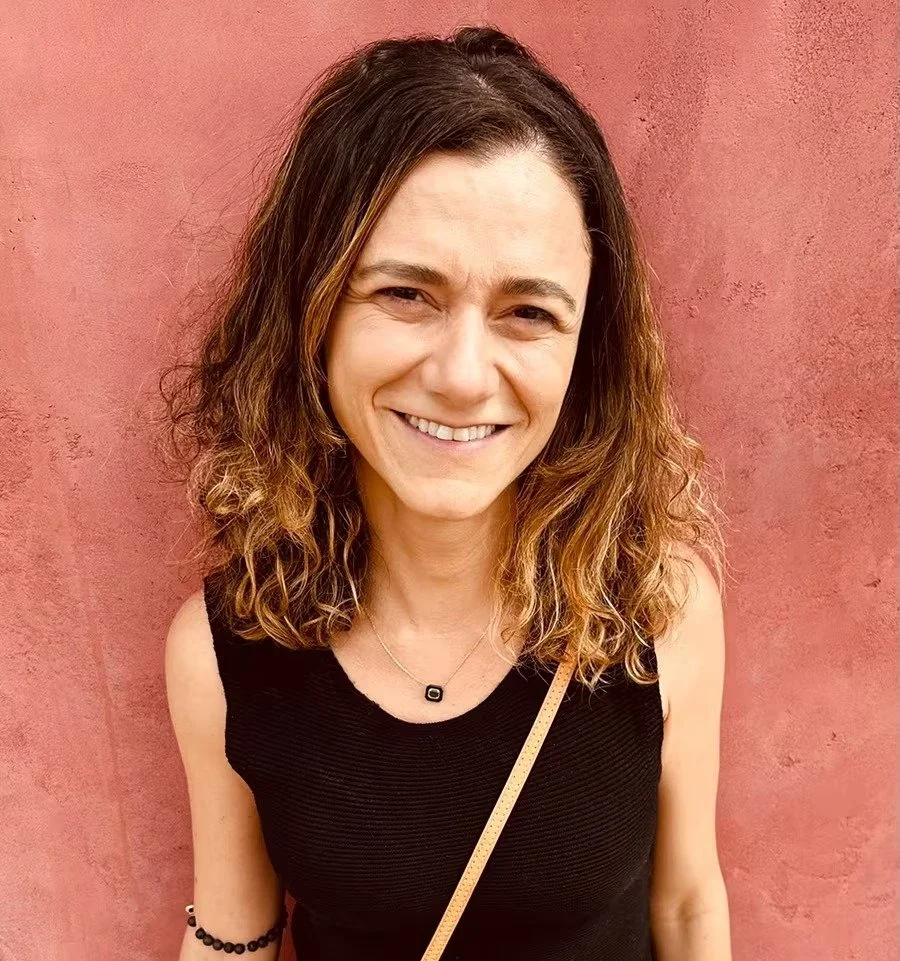
Fernanda Gebara is a mother, writer, scientist and lecturer from Brazil.
She has more than 17 years of research and practical experience with Indigenous peoples, looking at ayahuasca and plant medicine practices, behaviour change, biodiversity conservation and climate change mitigation.
This blog post originally appeared on her newsletter on the 4th April 2026. You can subscribe to this via her website.
Fe Gebara
www.fegebara.com
mfgebara@gmail.com
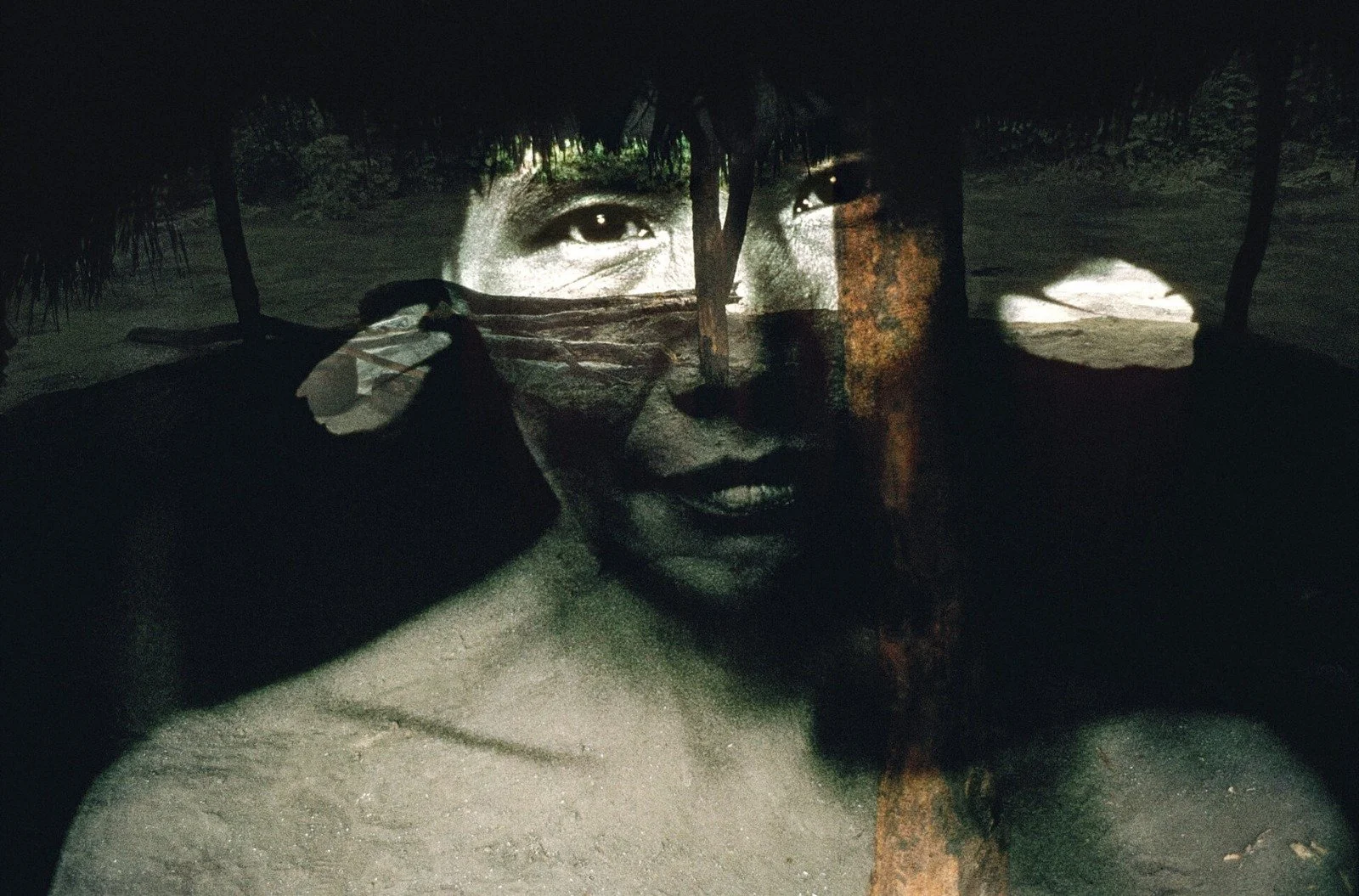
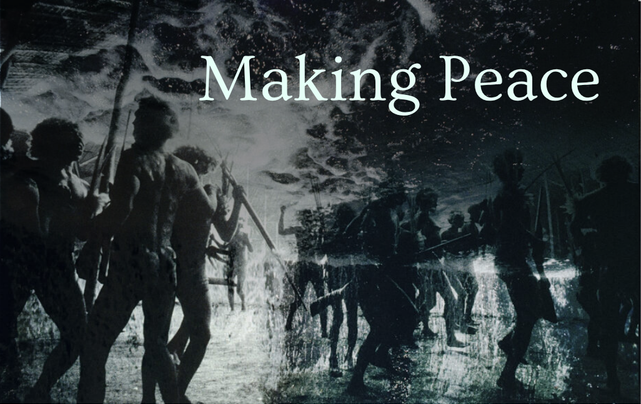
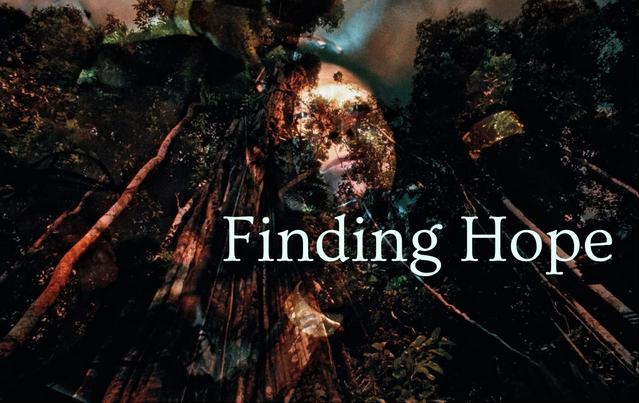
Image credits: The cover Image, the “Making Peace” and “Finding Hope” images are artworks from the exhibit “Sonhos Yanomami” by Claudia Andujar, 2002. The cedar artwork is a piece named “Pilgrimage to the Cedars of Lebanon” by Csontváry, 1907.